
U.S. residents may comment to this post through September 22 to be entered to win their choice of a signed paperback or ebook of Where Am I Going? Moving From Religious Tourist To Spiritual Explorer.
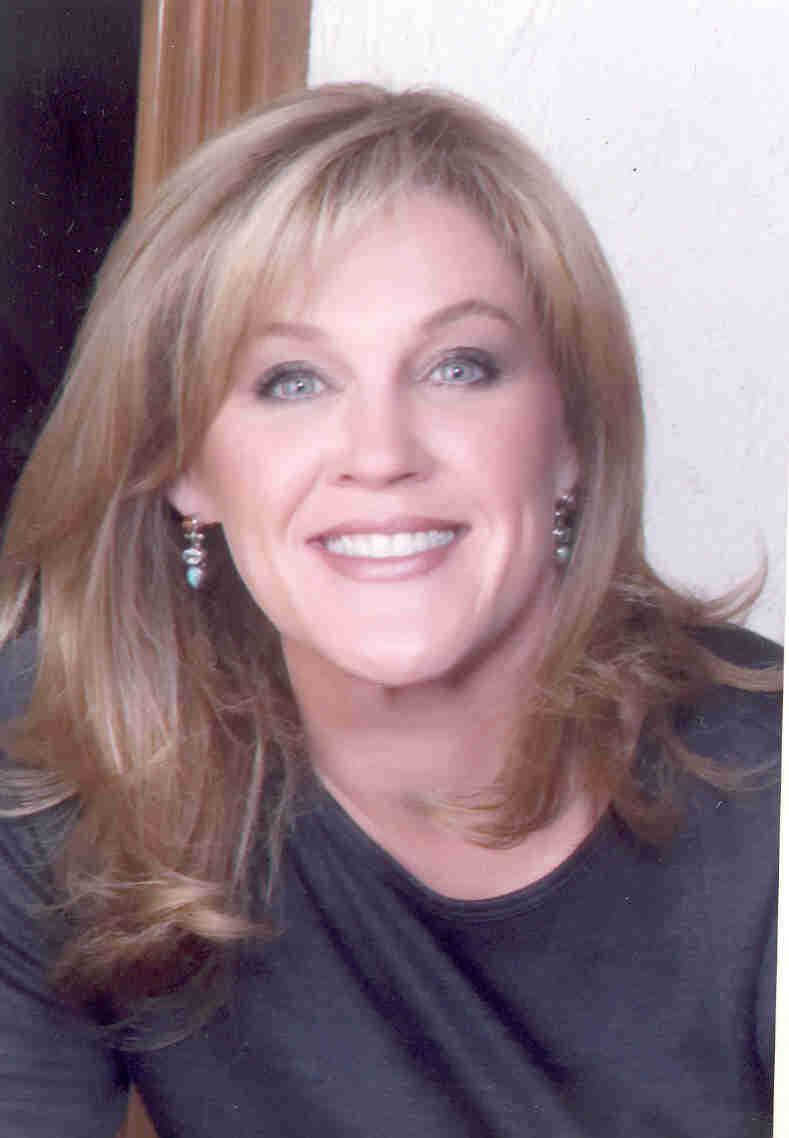
- Michelle Cromer
1) Welcome Michelle! How did Where Am I Going? Moving From Religious Tourist to Spiritual Explorer come about? Tell us why you wrote this book.
I will never forget waking up in Katmandu and not having any idea who I was. None. Zero. Zip. I don’t mean like Jason Bourne in The Bourne Identity or one of those soap opera stars who gets bumped on the head and can’t figure out who she is. No, I’m talking about something far worse: waking up to the horrible reality that I had no idea who I was or what my life meant. I was stuck in the middle of a meaningless existence. And I wanted out.
My disorientation in Kathmandu triggered more questions, all of which collided into one central question— Where Am I Going? Shouldn’t life be about more than just working, trying to make money, buying stuff, and traveling? What if there’s more to life than what we experience with our five senses? We know there are tones of music too high to be registered by the human ear. Aren’t there also colors beyond our perception? Just because I can’t hear the notes or see the colors doesn’t mean they aren’t real. What else could be beyond our earthly perception? Or is this really it?
This question began to dominate every action, every decision, every thought, and every moment of my life.
I wrote this book because I didn’t find answers reflected within the religious texts and spiritual books I studied over the years. and wasn’t getting any answers to my personal questions reading them. Although packed with wisdom, they were too often too serious, too academic, or too woo-woo. Whenever I ask my friends about spirituality, they launch into a story about their traditionally religious grandmother or the Jesus-is-your-only-savior TV evangelist, and neither was working for me so I figured this wasn’t working for others. This book is not so much a general guidebook as my individual approach of perceiving God and cultivating a personal connection.
2) Travel is as big a part of your memoir as spirituality is. How did you end up living in El Paso and what matters most to you when you think of home?
After I graduated from college, I went to New York to study finance and soon decided I wanted to get back to Texas, but I didn’t want to go into finance. I thought that an advertising agency might hire me and the only job interview I got was in El Paso, Texas. When I landed in El Paso from New York, I thought I had landed on the moon. I thought the desert was the ugliest place on earth. I ended up getting the job at the advertising agency and I set out to live in El Paso one year. I purposely lived in a part of the town where only Spanish was spoken so I could learn about the Mexican culture. I read every book I could on the Southwest to inform myself, and I took historical downtown walking tours every weekend. I ended up falling in love with El Paso, became a partner in the advertising agency that hired me and have lived in the beautiful desert for a little over two decades. Home is wherever I happen to be, and wherever my husband and children are. Home is not a place, not a house, not a town, but a feeling. In the end my search brought me home and back to myself. Searching outside for what exists within can be a critical mistake.
3) In your book, you lead us, using your own experiences, through the seven stages that humans go through in developing their souls. If the human race’s collective soul level today were to be described, what level do you think that would be?
It seems to be our fate to be living during a time of great upheaval and sweeping change. I feel the world today is in stage one, The Wake-Up Call. A great tragedy continues to occur in the modern world, where mass cultures overwhelm the importance of the individual soul and the notion of a life lived in accord with it. The growing tendency is to treat people as statistical segments and voting blocks, as interest groups and age categories, which serves to diminish the fact that each is also a unique individual. Our global village has a responsibility to assist each young person to find and develop the unique qualities that already exist within them. No notion of collective freedom and no amount of good intentions can substitute for the felt sense that one’s life has an inner meaning and that the inner spirit of one’s life is aimed at something beyond mere adaptation and survival.
4) You refer to The Age of Meaning at the beginning of your book. What is that?
The Age of Meaning is a time in your life when you wake up and ask deep spiritual questions that propel you to discover who you were born to be, leading you to an understanding of your life’s deeper purpose.
5) You make an interesting connection between beliefs and being aware of what upsets us. Can you go into that connection a bit for us?
I have discovered what makes people unique and therefore genuinely human is more vital than any dogma or doctrine and more creative than any ideology or system of belief. I feel when a person becomes really upset about something there is an underlying issue that they themselves have not resolved within. Being upset about something provides an opportunity to find the root of that particular issue. By searching within for what upsets us, and finding our own unique answers, we find the root of our deeper self and we become, “authentic.” Authenticity involves acting from ones deepest essence, so that the uniqueness of the person becomes more awakened and involved in life.
6) Where Are You Going is your third book. Were your first two also nonfiction? From first title to third, in what direction do you perceive your writing evolving?
It seems through my work, something deep within me knew exactly what I should do. I am becoming more myself through my writing. I see my writing evolving in what I am experiencing, not an escape from reality; more of a case of finding what reality is to me.
7) What’s next for you?
Using Where Am I Going? as a foundation, I am starting a movement called Spiritual Capitalism in the Age of Meaning. Spirituality points us to the meaning of life; business is about making money, but if we put them together spiritual capitalism-a growing and much needed development- we can take an integrative approach by making the connection between your business, work and you. Companies who are embracing this new paradigm shift are transforming the world of business. To these new mavericks, taking care of business means taking care of others. Not just because it is the right thing to do, but also because spiritual capitalism is a smart business move. Employees and managers who embrace spiritual values like respect and forgiveness are happier-and therefore more productive. Increasingly, consumers are using their purchasing power to reshape companies. The popularity of the green movement, organic produce and the growth of the socially responsible investment sector, a two trillion dollar business according to the Social Investment Forum are testament to the fact that the perceived conflict between “doing good” and “making money” is on its way out and companies which encompass spiritual capitalism are in.
8) You have a nonprofit, right?
Yes, I started Pink Crosses in May of 2004. Over 600 women have been brutally killed in Juarez, Mexico in the last decade. Anywhere from 400 to 500 are still missing. These humble Mexican women, (girls, most of them, between the ages of 12 and 22, mostly slender, long-haired and pretty) were either walking to or from their $50-a-week jobs at one of the maquiladoras.
The initial purpose of the foundation was to bring comfort and closure to the families of the murdered girls in Juarez through the use of forensic identification.
Frank Bender, a world famous forensic sculptor from Philadelphia was hired by the foundation to go to Juarez and perform facial reconstruction using the defleshed craniums of the victims. He uses his hands, tools, sculpting materials and his God-given talent.
The second phase of the project is underway, educating the sisters and girlfriends of the victims. I feel Mexico will benefit through the education of these woman. The foundation currently has a scholarship available to the University of Juarez.
9) What is your virtual address and how can my following purchase your books?
Author Website: http://www.michellecromer.com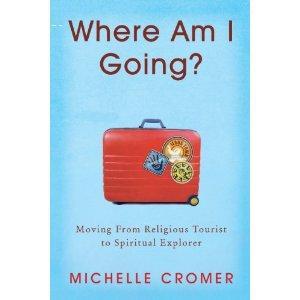
Amazon: http://tinyurl.com/3vljp8z
LinkedIn: http://tinyurl.com/3sfnvn2
GoodReads: http://tinyurl.com/3g86d87
Facebook Fan Page: http://www.facebook.com/stephaniebarko#!pages/Where-Am-I-Going/128270717244116?sk=info


