For the month of April I am participating in the annual A-Z Blogging Challenge. The Challenge was started by author/blogger, Arlee Byrd. http://tossingitout.blogspot.com

Each day of the month (except Sundays) we will post something based on that days correlating letter. Some of us chose a theme and others are winging it. My theme is the A-to-Z’s of Mental Health, Raising Awareness. It is a topic that is very close to my heart. I hope you find the posts interesting and you will comment and share the posts everywhere. To see a list of all of the participants or for more information-click on the badge over there to the right>
Today’s letter is I

Ideal Body Image
Sometime between the1950’s and the1960’s actual women’s sizes became larger but societal standards of a woman’s body started becoming thinner.
During the 1950’s Marilyn Monroe was the bomb, every man’s dream woman and she wore a size 14. By the time the 1960’s rolled in Twiggy with her tall slender size 0 was considered the ‘perfect’ woman.
The way the media portrays women absolutely affects the way young girls and women view themselves. The standards the media sets when it comes to the perfect size is not only unrealistic it can be dangerous. It is still unclear why some internalize negative body image and self views to the point of disordered eating habits that can become full blown anorexia or bulimia. Concerns over their weight and appearance, usually surface early in girls with most between the ages of 9 and 14 expressing the desire to lose weight. 3 to 10% of them will develop anorexia or bulimia between the ages of 15 and 29.
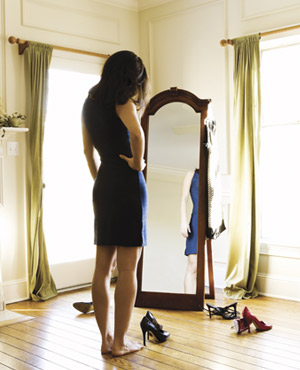
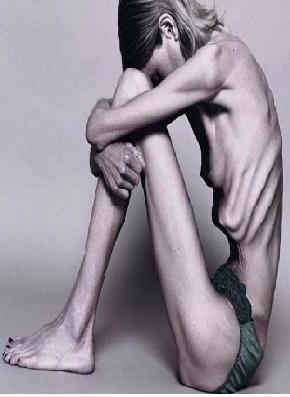
Women suffering from anorexia nervosa have an irrational fear of becoming obese and a preoccupation with their food. Their ideal body image is completely distorted. Anorexic women weigh less than 85% of the expected body weight for their age.
Men’s roles have changed drastically and so has their ideal body image. Male concerns of appearance and weight have tripled over the past 25-years. They are bombarded with images of muscular super hero’s from a very early age but teasing from family and friends affects them more than the media’s portrayal of them.
With men it seems they are more occupied with building muscle mass than they are with weight. This can lead to the use of performing enhancing drugs. (steroids) They are not only used by athletes. 4 out of 5 men have ideal body image issues.
A poor body image can lead to psychological and behavior problems, depression and low self-esteem. It can also lead to poor sexual decisions and eating disorders.
We all want to look and feel good. The best way to do that is to eat healthy, exercise and get enough rest.
- Do not rely on society’s definition of how you should look.
- Focus on your accomplishments, not your looks
- Replace negative internal messages with positive ones
- Accept who you are. Your family, your culture, race and ethnicity all play roles in the way we are shaped.
Always be realistic about developing a healthy body and life style. Exercise and dieting should not interfere or cause imbalance in your life or relationships. If you are exercising while sick or injured, you may need to re-evaluate.
*A perfect body is the body you are the most comfortable living in.*
I would love to hang out with you here too:
http://www.facebook.com/pages/Bristol-boyzStomp/113804488656243
http://www.twitter.com/doreenb8


10 thoughts on “Ideal Body Image”
Doreen, this is excellent information. In treating people for over 20 years, I have found eating disorders to be one of the toughest. Once your thinking has become distorted, it’s very difficult to turn it around. Plus no one can avoid eating although anorexics may try. So glad that you have chosen mental health as your topic!
Thank you, Dr. Margaret. Its been a fun way to do research for a book.
I’ll admit, I’m pretty critical about my body, but not so much that it’s been detrimental yet. I probably fall into that trap of society’s ideal, where I would like to be 18% body fat and am usually not happy with my midsection. Diets are where it really gets me. I don’t follow fad diets, but I do start calculating macro-nutrients and counting calories…only to fall off the wagon within a week (I love my rice and pasta too much). I suppose I’m more like a male in that fashion, but love for my breast-fed child has kept me from taking any sort of supplement.
I don’t know that I can change my thinking though. Because I know I can achieve my goal (I’m at 20%), and it’s only from a lack of diet discipline that’s keeping me from it.
I love the rice and pasta too much too, and bread and chocolate too! I don’t think any supplements really work.
This is so important for people to recognize. It is amazing that we have so many people in the USA that have eating disorders (both over, under, and expulsion). A couple years ago, the youth group that my husband and I worked with really tried to stress self image – both physical and psychological. It was a rough year!
I think it is worse than the statistics.
That image of the emaciated girl broke my heart. I remember Twiggy! Terrible role model. Of course, I’m not into being a Reuben model either. Give me a nice in-between body.
It is heartbreaking. It seems to me if a size 12 is the average size most of our models would be sizes 10/12/14. That would make such a difference.
Hello Doreen,
I enjoyed the comment you made about Marilyn Monroe. In such a short time, society’s portrayal of the ideal body changed so drastically, which has caused so many problems with body image today. I also believe that society has created an unrealistic standard of beauty that most people cannot physically achieve, and we need to be aware of its effects and take steps to ensure that everyone understands the reality of the issue.
Would you mind reading my blog at http://sites.isucomm.iastate.edu/raharken/28-2/ ? I would like to have your perspective.
Rebecca Harken
raharken@iastate.edu
The Green Room at Iowa State University
Thank you Rebecca. I wpuld love to read your blog.